
 0
0



- Home
- Blog
- Application Scenarios
- [Industry Case Study] How do steel mills solve the "mixed steel" problem? A precise tracking solution for 800℃ high-temperature environments
[Industry Case Study] How do steel mills solve the "mixed steel" problem? A precise tracking solution for 800℃ high-temperature environments
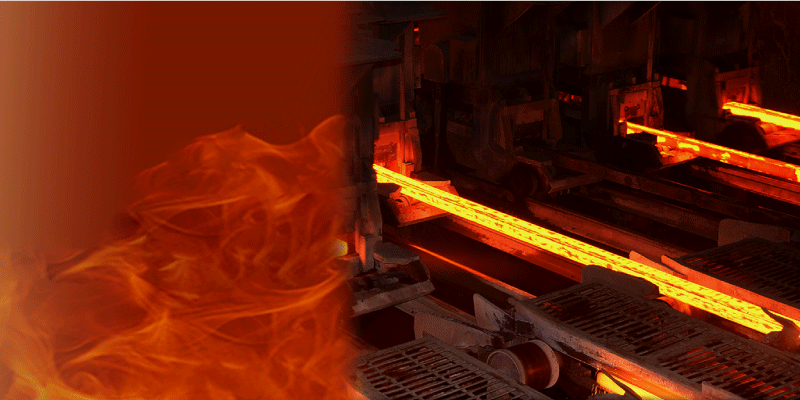
In the steel production process, "tracking and identification" is the core of ensuring quality. However, when faced with steel ingots or coils that often reach 800°C, traditional marking methods are often inadequate and can even become a bottleneck to production efficiency.
The "hidden costs" of traditional management methods
In the past, many steel mills relied on the following two management methods:
-
Manual spray marking: Text is sprayed at a high temperature of 800℃, but as the temperature drops or oxidation occurs, the text often becomes blurry and difficult to read.
-
Label after cooling: Regular shipping labels can only be affixed to the steel after it has completely cooled in the yard.
This created a serious vulnerability: During the gap between "production completion" and "labeling", if there are errors in manual recording or changes in placement, a serious problem of ** "mixed steel (confusion of steel types)" ** will occur. This could not only lead to incorrect shipments, but also potentially cause huge losses in subsequent processing.
Santa's solution: ST-700T High Temperature Resistant Label
To overcome this challenge, Santa Special Printing has launched the [ ST-700T 👉 Click here to view detailed product specifications. ] , designed specifically for extreme environments.
This label can withstand extreme high temperatures of 800℃ and enables the steel industry to achieve digital management of "instant labeling at the hot end".
📊 Digital Management vs. Traditional Spray Painting
| Comparison items | Traditional visual inkjet printing management | Santa ST-700T Digital Solution | |
| Timing of work | We must wait for the situation to cool down (there is a risk of information disruption) |
Instant labeling on the production line at 800℃ | |
| Recognition accuracy | Human eye reading (prone to misjudgment/errors due to fatigue) |
Automatic barcode/QR code scanning | |
| Mixed steel risk | High (cooling-off period lacks formal identification) |
Extremely low (labeled immediately after baking, traceable throughout the process) |
|
| Inventory Management | Manual registration is inefficient | Integrate with the system to update inventory status in real time | |
Four major changes after the introduction of ST-700T
-
Eliminate human error in identification: Use barcodes for accurate product ID identification, replacing blurry spray-painted text.
-
Seamless process integration: Labels are directly affixed during production, eliminating steel mixing errors caused by "gap periods".
-
Automated warehousing: Inventory reconciliation speed is increased by more than 50% through scanning equipment or AI image recognition.
-
Improve shipment accuracy: Ensure that the factory information for each steel ingot is completely consistent with the order, thereby enhancing brand reputation.
Conclusion: Digital Transformation Starting with Tags
abels may be small, but they are the starting point for digital management.
📍 Recommended products related to this case study:

Rain


Article Classification
Recent Articles
- [New Product Launch] Setting a New Benchmark for Anti-counterfeiting: Shengda's "High-Performance Customized Fragile Paper" Solves Four Major Pain Points of Traditional Labels
- [Professional Solution] Practical Application of GHS Labels in Maritime Shipping: Four Core Performance Characteristics for Withstanding Extreme Environments
- [Professional Analysis] The Significance of BS 5609 Certification: A "High-Performance Label" Standard Safeguarding Global Maritime Safety
- Sustainable sealing solutions for advanced biotechnology and premium packaging
- [Industry Case Study] How do steel mills solve the "mixed steel" problem? A precise tracking solution for 800℃ high-temperature environments