
 0
0



- Home
- News
- Exhibition
- The survival, departure, and value of sustainability pioneers
The survival, departure, and value of sustainability pioneers

Issued by: Vice General Manager, Shi-Yu Zheng
The Foundation for Survival
The Foundation and Necessity for the Survival of Sustainability Pioneers
The existence of sustainability pioneers is to address the urgent challenges brought about by global warming and climate change, as well as the resulting pressure from international regulations and domestic policies.
Driven by international regulations and market trends:
-
Over 140 countries worldwide have declared net-zero emissions targets for 2050.
-
International carbon tariffs are imminent: The US Clean Competition Act (CCA) is expected to be implemented in 2024, while the EU Carbon Border Adjustment Mechanism (CBAM) will officially levy carbon fees in 2026 (with a transition period from 2023 to 2025, during which carbon emission data must be disclosed).
-
Product carbon data requirements: Starting in 2023, many products have been required to include carbon emission data and documentation.
-
Product carbon data requirements: From 2026 onwards, EU DPP.
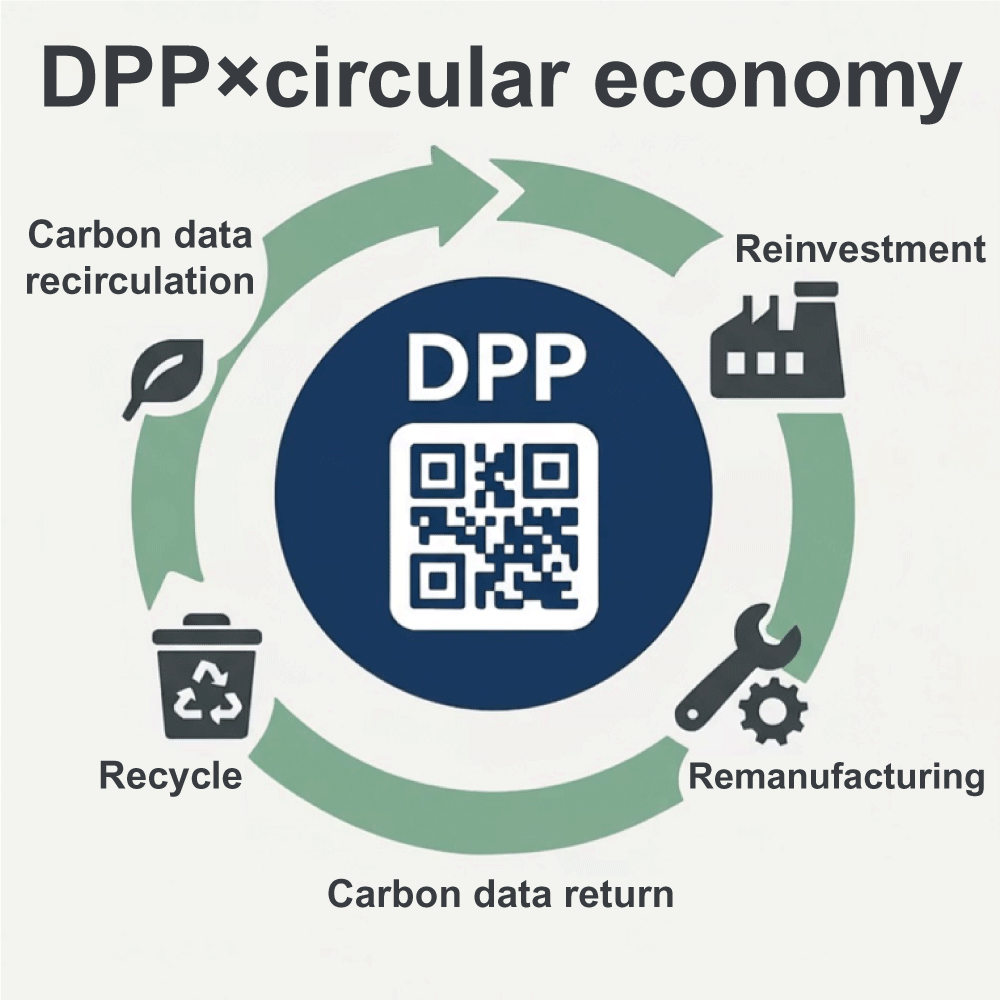
DPP Scans Carbon Footprint × Circular Economy
Background Information
The EU is promoting the Digital Product Passport (DPP), which requires products to be scanned (OR code / NFC) to immediately obtain product lifecycle information when entering the EU market. Among these, the Product Carbon Footprint (PCF) is a mandatory item.
DPP makes product information transparent and connects with the circular economy's "tracking, recycling, remanufacturing, and reinvestment" processes to form a verifiable and recyclable low-carbon management system.
DPP × Circular Economy Integration Architecture
Source (Front-end)
- Raw Materials & Suppliers: Raw material composition, supplier information
- Process Information: Process energy consumption and emissions
- Transportation & Logistics: Transportation and logistics data
- Product Specifications: Product specifications and service life
- Recycling & Disposal: Recycling methods
- Total carbon footprint: ISO 14067
Key information revealed after scanning
- Product Basic Information: GTIN, Manufacturer, Serial Number
- Lifecycle Carbon Footprint: A1-A3, B, C, D Modules
- User Instructions: User instructions and maintenance methods
- Recycling and Reuse: Recycling and reuse guidelines
- Verification Status: Verified / Unverified
Circular Economy Processes and Data Feedback Mechanisms in DPP
(1) Usage phase
Users or inspectors can scan the DPP to see the product's carbon footprint and material composition.
(2) Recycling (End-of-Life)
Recycling plants can utilize the material and dismantling information provided by DPP to improve sorting and dismantling efficiency.
(3) Remanufacture
Remanufacturing plants can read the material, performance, and maintenance records in DPP to ensure that recycled products meet specifications.
(4) Production Re-entry
Once recycled materials return to the supply chain, companies can update their product carbon footprint and the proportion of recycled materials based on the DPP (Digital Product Development Plan).
(5) Carbon Data Feedback
The new carbon footprint data is written back to DPP, forming a "data loop" that supports: low-carbon product design, supply chain carbon management, CBAM reporting, and customer/government carbon reduction verification.
The benefits of DPP to enterprises
-
Enhance compliance capabilities for entering the EU market (Ecodesign, CBAM, ESPR)
-
Carbon transparency Reduce Greenwashing Controversy
-
Increase the utilization rate of recycled and circular materials
-
Establish verifiable low-carbon product competitiveness
-
Improve supply chain integration efficiency Data is no longer scattered
DPP carbon footprint scanning process diagram
 Product with QR code/NFC sticker
  Mobile phone/scanner reads DPP
  Accesses DPP Portal in the cloud
  Displays product carbon footprint & material information
  Recycling/remanufacturing processes dismantle and reuse products based on DPP
  Carbon data recirculation → DPP update → formation of a closed-loop cycle

DPP drives the circular economy
A transparent, traceable, and sustainable future
By integrating DPP carbon footprint scanning with the circular economy, companies can not only comply with EU regulations, but also build verifiable low-carbon competitiveness, driving industries into a new era of sustainable development.
Domestic mandatory requirements
Financial Supervisory Commission regulations
Listed companies in Taiwan are required to complete greenhouse gas inventory and verification in stages, based on their capital and industry. Ultimately, listed companies with capital of less than NT$5 billion are required to complete the inventory of their consolidated subsidiaries by 2027.
Domestic carbon fee levy
Taiwan will introduce a carbon tax in 2024 (NT$100 to NT$300 per tonne). Declarations must be submitted before April 30, 2025, and payment must be made before May 31, 2026.
Supply chain pressures and consumer priorities
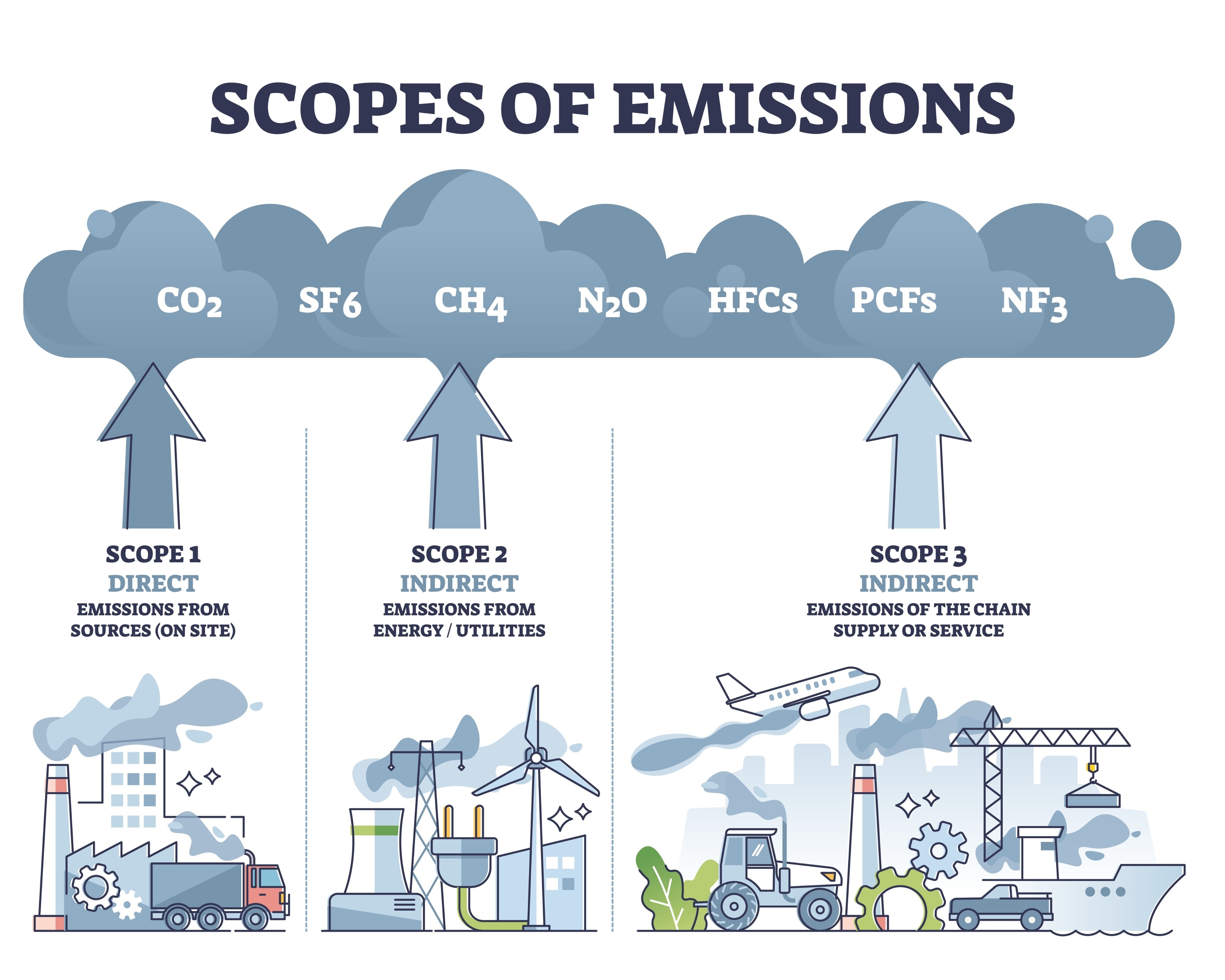
Scope 3 of emissions: 80% of the overall impact of climate change
Category 3 (indirect emissions that are not directly controlled or managed) accounts for as much as 80% of the overall impact of climate change.
Therefore, large corporations (such as TSMC) hope to "lead by example" and drive carbon reduction among their supply chain members.
Consumers have a high level of acceptance of carbon labeling for products, which motivates companies to disclose carbon emission information to demonstrate their efforts in reducing carbon emissions.
Author: Ivy Cheng
Source: TAIWAN VISION DEVELOPMENT ASSOCIATION
